Thursday, August 23, 2012

Top Ten Facts about motor oils


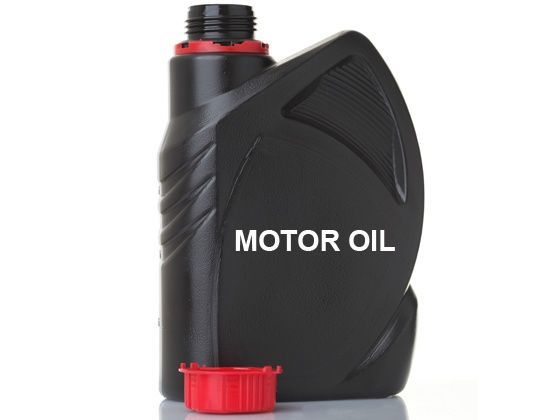
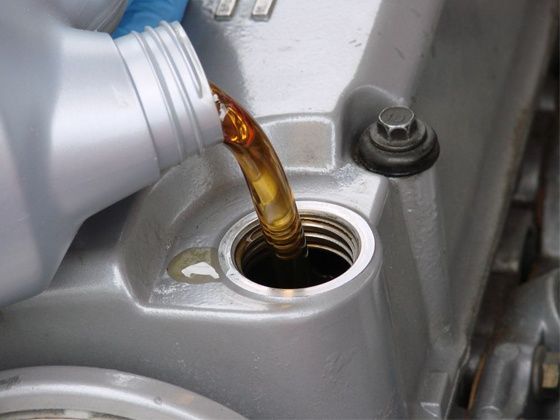
Motor Oils

Photo credit: Thinkstock


1.    Motor oils do not just mean engine oil. A number of mechanical components are like transmission and brakes use their respective motor oil. Make sure to get them replaced as needed.
2.    Synthetic engine oil protects your vehicle under extreme conditions. But, will not increase performance or efficiency substantially.
3.    Motor oils for different components have different ratings and viscosity. Use with extreme care in case you are changing them yourself.
4.    There are three types of motor oils – Mineral/regular, Semi-synthetic and Synthetic. Be sure to check for the SAE international rating to match that of the vehicle as recommended by the manufacturer.
5.    High engine speeds induce more stress on vehicle components. Make sure to get motor oils checked and replaced if needed.
6.    Commonly known as the ‘Dark Oil Myth’, partially dark motor oil does not indicate an oil change. However, make sure it is replaced at the right oil change interval, either after a certain number of kilometres have been covered, or in terms of sheer time lapse.
7.    Service intervals and replacing motor oils vary from place to place. Make sure you consult your mechanic about the ideal time of servicing, or it is always a good idea to refer to your car’s owner’s manual.
8.    While getting motor oil changed, make sure filters for the same are also replaced. They are the first line of defence against impurities and protect the component.
9.    Getting motor oil changed too frequently won’t do any good. Change the oil only if it benefits the vehicle. Non-synthetic oils should undergo replacement at 5000km interval.
10.    Today’s car design and equipment does not make it too easy to change the oil at home and especially the filter. It can be very tricky and might need special tools, which vary from manufacturer to manufacturer. In certain cases, accessing the oil filter may entail removal of other components from the engine bay or sump guard. So unless you are experienced with working on your car yourself, it’s a job best left to the professionals. What you can do easily do at home is top-up various oils and fluids if their level has dropped down.
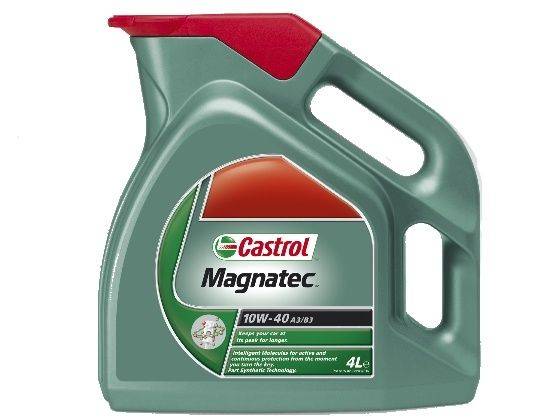

 

Castrol most preferred engine oil: ZigWheels Facebook poll


Castrol Magnatec


ZigWheels had initiated a Facebook poll among its fan base on the engine oil of their choice. Castrol received the maximum number of votes, 54 out of 76, from among six engine oil brands including  Servo, Elf, Shell, Mobil1 and Petronas. Shell was placed second with 16 votes, while the more expensive Mobil1 and Petronas won six votes and one vote respectively. Elf received one vote while Indian Oil’s Servo had no score.
“Castrol offers the best quality at a very reasonable price. Not only does my car run smoother and delivers good fuel efficiency in my Santro Xing, it also reduces the engine noise creeping in the cabin,” said Deepak Kumar.
 “I have an Alto and travel a lot around the city. After two years of my vehicle’s life, I switched to Castrol Magnatec and it has been a blessing to my car. Not only is it easy to trot around in the city, I have to struggle less with gear changes,” said Juhi Mohan. Kumar Gaurav had this to say: “Good quality synthetic engine oil offers a smoother, faster and responsive vehicle. Compare it to your regular engine oil and you will feel the difference.”
With Indian car owners opting for expensive engine oils, the prospects for international brands like Castrol, Shell and Mobil are lucrative. Indian brands, therefore, will have to ensure quality products to compete with international brands.


What do oil grades mean?


Engine oil grade


Photo credit: Thinkstock


Choosing the right grade of motor oil for your car can be confusing. But using the right grade is vital for the durability of components as it reduces wear and tear. Cars have rated grades for engine, transmission and other oils. And numbers like 10W-30 or 0W-80 may puzzle you, but  are easy to understand.
Multi-grade oils work over a temperature range unlike single grade oils. In a rated grade like 20W-80, the ‘W’ specifies the minimum temperature the oil can function in. The 20W means signifies the minimum temperature for ideal viscosity of the oil is 20 degrees Celsius. The ‘80’  denotes the maximum temperature of 80 degrees Celsius. An improper grade of oil will not be viscous enough and will cause components to overheat and damage them.
Here are some tips while choosing the oil:
1.    Check the grade of the oil and ensure that it is approved by SAE International.


2.    Select the grade specified by the manufacturer. The grade of engine oil is different from transmission oil or gear oil.
3.     Consult manufacturer/dealer for the ideal grade of engine oil for high performance cars.
4.    Different components have different grades. Refer to the users’ manual for grades of various oils. Transmission oil has a higher temperature range than engine oil and cannot be used in the engine.
5.    Petrol and diesel engines need different oils. A diesel engine uses heavier, thicker engine oil than a petrol motor.
Follow these tips for a long and trouble free experience with your car’s engine

How often should you change engine oil?


Oil change


Engine oil change is part of a vehicle’s regular service. But, at times, an oil change becomes imperative earlier than the service date. So, when and how often should you change engine oil?
A car user’s manual recommends regular service and engine oil change intervals. But a premature oil change may be needed if the engine has suffered excessive strain. Engine oil becomes thinner over time and loses its lubrication ability, necessitating an oil change. If ignored, it can reduce engine life.
Changing engine oil is an absolute must if you are starting a vehicle after a long interval, if you’ve travelled long distances at high speeds or gone mud-plugging. If a car has not been used for over two months, the engine oil collects in the sump and loses viscosity due to lack of circulation and a cold engine. So the priority is an engine oil change before you use the car. During high speed driving, there is more stress on the engine and the engine oil has to work harder for ideal lubrication which causes it to become thinner and necessitates replacement.
Synthetic engine oil has a better grade and can work in extreme conditions. But visit your mechanic for a check-up to make sure of its functioning.


Wednesday, August 22, 2012

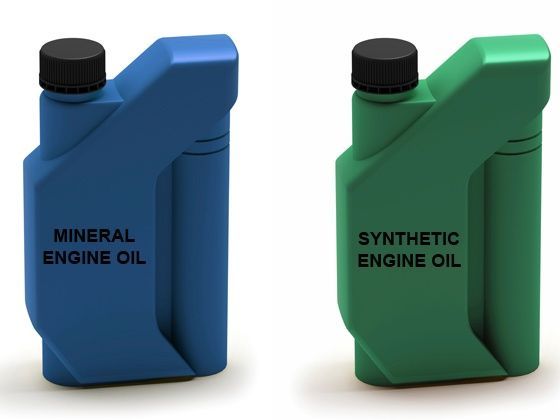
Synthetic engine oil vs. Mineral engine oil


Mineral engine oil vs. Synthetic engine oil

Photo credit: Thinkstock


Almost every engine oil manufacturer has introduced their brand of synthetic engine oils in the market, claiming better performance, mileage and longer engine oil change intervals. Does it make sense to go in for these expensive oils when a car manufacturer does not recommend it for their car?


Mineral engine oil


These are a by-product of the crude oil refining process. Broadly speaking, the thicker by-products from refining process become asphalt-type materials used as tar for various purposes. The fine, carbon-rich volatile substances are further refined to make fuels like petrol and diesel. The rest of the crude oil is often contaminated with sulphur and other contaminants; this is used as the base for making engine oil.


Pros:


Lubricate moving parts in an engine and, according to the level of refinement, can perform well in varied conditions


Are cheaper compared to semi-synthetic or synthetic oils


Cons:


The markedly simple way that they are produced compared to synthetic blends of oil makes them unstable and prone to loss of viscosity under extreme conditions.


They contain some contaminants which form sludge. This can be dangerous in the long run if the oil change intervals are not followed


Synthetic engine oils


Synthetic engine oils are made in laboratories, but are based on conventional mineral oils. Extensive refining and the presence of chemicals which alter the viscosity and other characteristics of the oil make them better suited for high performance engines. 


Pros:


Synthetic oils can handle changes in temperature and engine load much better than mineral oils


They have added chemicals which reduce sludge formation


Synthetic oils have better low temperature viscosity and flows more easily in between moving parts in an engine. This means that it is less resistant, and can lead to enhancements in fuel efficiency and engine performance.


As the oil is resistant to sludge formation for longer period, the oil change interval is longer


Cons:


Their technology intensive production method renders them costlier.


They are not recommended on high-mileage engines, as their chemical composition has been known to affect the rubber seals and cause oil leaks. 


Their effectiveness on low performance engines is not significant


Mineral engine oils can face the stresses of daily driving easily, keeping the engine running smoothly and efficiently. Synthetic engine oils are beneficial in high load situations, say for example when you take your car off-roading or drive it high speeds for a long duration. It is not recommended that you use these oils if your car is not being driven in extreme temperature changing conditions, is not driven in high-altitude locations and is not equipped with a high-performance engine.


Conversely, using them does necessarily put a dent in your pocket; a bottle of synthetic oil is known to last for 50-100 per cent longer than mineral oil. Synthetic oils reduce wear and tear inside the engine, creating less sludge and increasing the longevity of the engine. All these factors lead to savings in the long run. On the whole, synthetic engine oil is definitely better.


Reputed brands of mineral engine oil cost Rs 370 for a three litre can, while synthetic engine oil costs Rs 2,700 for three litres. Castrol, Petronas, Shell and Mobil1 are reputed brands of engine oil. 


Brembo P50074N Front Ceramic Disc Brake Pad Set for Mercedes

$42.58
End Date: Wednesday Jul-17-2019 8:49:13 PDT
Buy It Now for only: $42.58
Buy It Now | Add to watch list

Tuesday, August 21, 2012

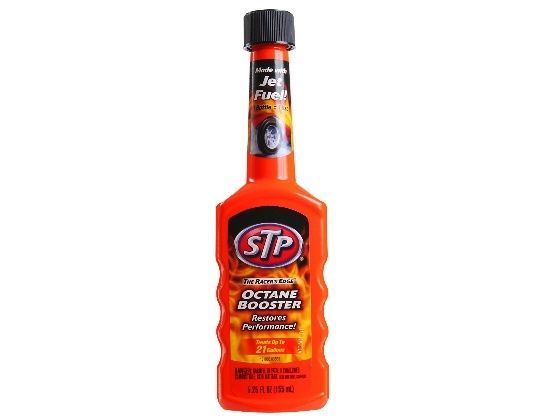
High octane fuel vs octane boosters


STP Octane Booster


There are many factors which affect the performance of an engine. High octane fuel and additives can boost the performance of a car’s engine.


What is octane number?


The octane number of the fuel or additive tells you if the fuel can be used in high performance machines. The higher the octane number, the better it burns and the better the engine performs. A lower octane fuel than what is recommended can damage the engine as it causes ‘knocks’ or irregular ignition. For a high octane fuel mix, get high octane fuel or get octane boosting additives.


High octane fuels burn only when the spark plugs fire, and burn cleanly. These fuels are usually cleaner as they go through an extensive process during and after refining. 


Octane boosters are additives to your fuel to increase the octane number of the fuel. These additives, which may include alcohols, ethers, manganese or other chemicals improve the performance of the engine in terms of either acceleration,  top end speed, efficiency or all of them.


High octane fuel and boosters have negligible or absolutely no effect on low performance road-going cars. A manufacturer recommends a minimum octane fuel rating and these products will not make a difference. High performance engines require high octane fuels as it is imperative that the fuel burns properly and the engine extracts the maximum performance possible. 


While both high octane fuel and boosters provide similar levels of performance, it is better to use the former. The advantage of octane boosters is that they are easily available compared to high octane fuels. In India, high octane fuels are mostly available in petrol pumps in major cities only and boosters can be a life saver. The combination of octane boosters and low octane fuel is costlier than the same quantity of  high octane fuel. 


Use high octane fuels for a high performance engine and use boosters only as a last resort. Avoid using high octane fuel or boosters for a stock road-going car.


Mineral engine oil


Mineral based engine oil


Photo credit: Thinkstock


An internal combustion engine has parts that move almost 6500 times a minute. The friction and the subsequent heat generated have an adverse effect on these parts, and engine oil lubricates them and averts damage. Temperatures in petrol engines reach 160°C, while diesel engine temperatures go over 315°C.


Engine oil is made from a heavy, thick substance derived from crude oil, with additives to improve certain properties. Engine oil forms a lubricating film between moving parts due to their viscosity. The viscosity or thickness must be adequate to form a lubricating film, but thin enough for the oil to flow around the engine parts.


Mineral engine oils are made from refined petroleum products, and do not contain man-made compounds. Additives change the oil’s viscosity. Mineral oils lubricate the engine parts and they have a large viscosity range. These oils are cheaper than synthetic and partially synthetic engine oils.


Mineral oil is not as versatile as synthetic oil and must be changed more often.


Prices for mineral engine oils start at Rs. 370 for a three litre can.


Monday, August 20, 2012

BMW FRONT BRAKE PADS X5, X6 MODELS OEM Germany Genuine OE BMW 34116852253

C $242.75
End Date: Friday Sep-20-2019 15:43:40 PDT
Buy It Now for only: C $242.75
Buy It Now | Add to watch list

Days of Thunder director, Tony Scott, found dead after jumping off bridge

Filed under:
,,

data-ad-client="ca-pub-3906908376837136">


The cinema world has lost one of its greats, as director Tony Scott was found dead yesterday in an apparent suicide. The 68-year-old director left notes in his car and office before jumping off the Vincent Thomas Bridge, which is located in San Pedro, CA. The bridge, which connects San Pedro to Terminal Island, spans Los Angeles Harbor and is 365 feet at its highest point, while State Route 47 is roughly 185 feet above water. Authorities have said evidence points to no other explanation than sui

Continue reading Days of Thunder director, Tony Scott, found dead after jumping off bridge


Days of Thunder director, Tony Scott, found dead after jumping off bridge originally appeared on Autoblog on 2012-08-20 14:00:00. Please see our terms for use of feeds.


Permalink | 
Email this | 
Comments

Saturday, August 18, 2012

Thursday, August 16, 2012

Monday, August 13, 2012

Friday, August 3, 2012

Thursday, August 2, 2012

Popular Posts

Popular Posts

Popular Posts